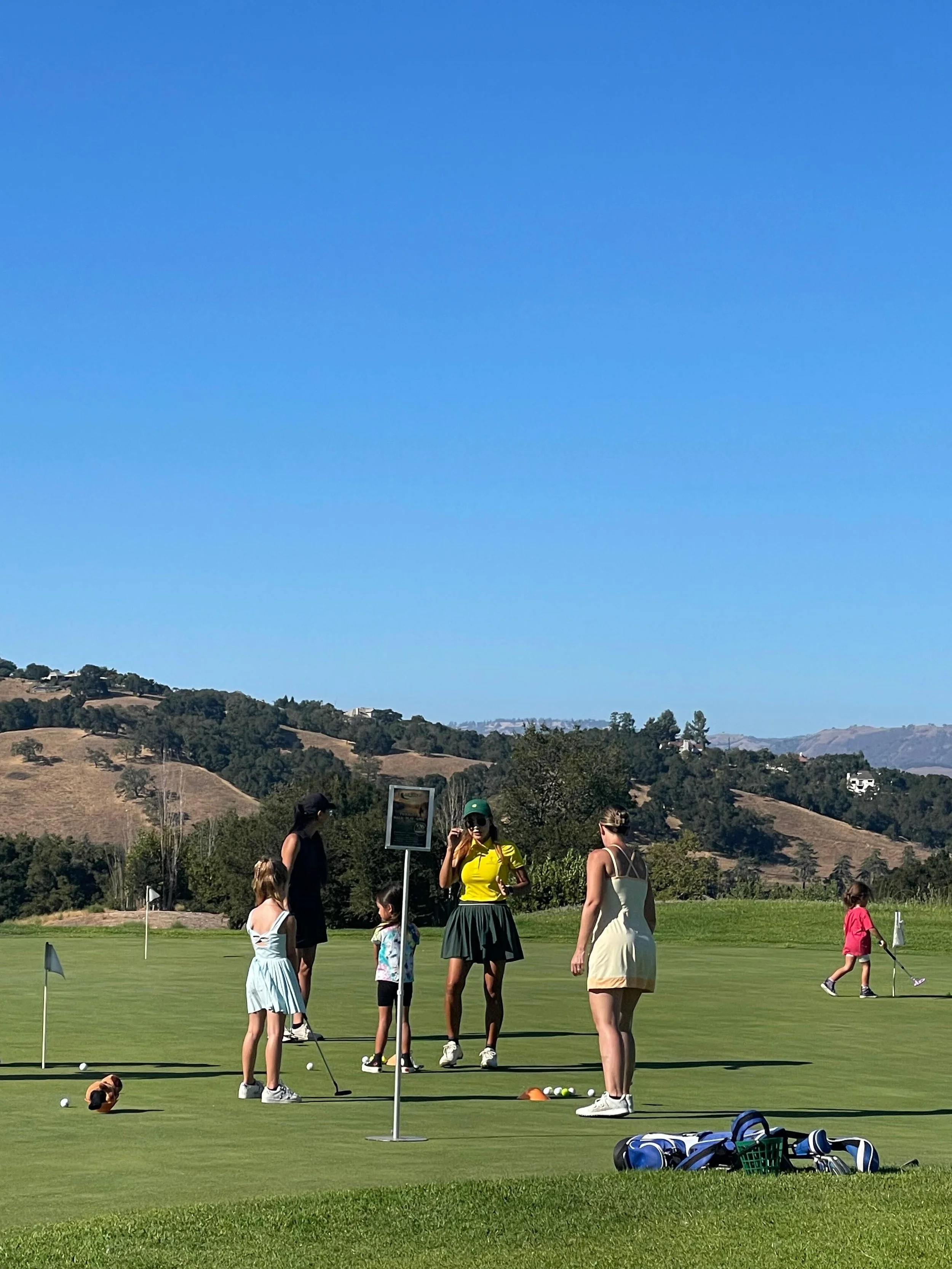
Before a girl takes her first golf lesson, someone has to make that opportunity possible. There needs to be a place to practice, equipment she can use, and someone ready to teach her. Just as importantly, she needs to feel that she belongs there.
For families unfamiliar with golf, figuring out where to start can feel overwhelming. Questions about cost, transportation, equipment, and experience can prevent a girl from trying the sport before she ever picks up a club.
Making golf more accessible means paying attention to each of those steps. At Golf Like a Girl, free instruction is part of our mission because we believe more girls deserve the opportunity to learn. Creating that opportunity takes practical resources, thoughtful planning, and a welcoming community.
Start by Making the First Step Clear
A family interested in golf might not know the difference between a clinic, a private lesson, and a junior program. They may also wonder whether their daughter needs experience before signing up.
Clear information can make that first step easier.
A program description should explain who can participate, what the session includes, where it takes place, and how to register. Families also need to know what equipment is provided, what they should bring, and whether there are any additional costs.
Simple details matter. Knowing where to park or whom to look for upon arrival can help a new family feel prepared.
Accessibility begins before instruction starts. It begins with making the invitation easy to understand.
Look Beyond the Price of a Lesson
Free instruction removes an important financial barrier, but participation can involve other expenses. Families may still need to consider transportation, equipment, clothing, or facility fees.
That is why transparency matters. When a program says instruction is free, families should be able to understand exactly what that covers and what, if anything, they may need to arrange separately.
Programs can also consider which expectations are necessary for a beginner’s first experience. Requiring families to purchase a complete golf wardrobe or full set of clubs before trying the sport can make participation feel out of reach.
The first experience should give girls a chance to discover whether they enjoy golf before their families make a larger commitment.
Make Suitable Equipment Available
Having access to a club is a starting point, but having equipment that a girl can comfortably use matters, too.
Programs serving different ages and heights need to consider a range of equipment. A club that works for one participant may be difficult for another to handle.
Shared equipment and loaner options can help families explore the sport without immediately buying their own clubs. Clear instructions about borrowing and returning equipment also help keep those resources available for future participants.
Equipment donations may be helpful when they match a program’s needs. Before donating, ask what sizes, types, and conditions the organization can accept.
A thoughtful donation starts with understanding what participants can actually use.
Create a Place Where Beginners Feel Welcome
A girl may have access to lessons and equipment but still hesitate because she thinks everyone else will already know how to play.
The learning environment can help address that concern.
Coaches can explain unfamiliar terms, demonstrate activities clearly, and make room for questions. Participants should know that missing the ball, needing another explanation, or taking longer to learn a skill is part of being a beginner.
Welcoming instruction also means avoiding assumptions about a girl’s experience based on her age, appearance, or family background.
Some participants may have grown up around golf. Others may be visiting a course for the first time. Both deserve patient instruction and the opportunity to learn at an appropriate pace.
Consider Schedules and Transportation
An available program is only useful to a family if they can get there.
A weekday afternoon may work well for some households and be difficult for others. Travel distance, school schedules, caregivers’ work hours, and access to transportation can all affect participation.
Programs cannot solve every scheduling challenge, but they can listen to families and look for patterns. Asking which locations and times are realistic can reveal obstacles that might otherwise go unnoticed.
Sharing dates early also gives families more time to make arrangements.
Partnerships with schools, park districts, and community organizations may help programs reach families and identify convenient places to introduce golf.
Support Different Ways of Learning
Girls arrive with different learning preferences, abilities, and comfort levels. One participant may understand a movement after watching a demonstration, while another may need a verbal explanation or a smaller step to practice first.
Creating options helps instructors meet participants where they are.
That might include demonstrating an activity more than once, offering clear visual targets, or adjusting a task with guidance from a qualified instructor. Families should also have a way to discuss access needs before attending.
Programs should be honest about their facilities and available support so families can make informed decisions.
A welcoming message is strongest when it is supported by practical preparation.
Give Girls a Way to Continue
A positive first lesson is valuable, but families also need to understand what can happen next.
Clear information about future sessions, practice opportunities, and available resources can help a girl continue exploring her interest. Without that guidance, families may leave an enjoyable introduction unsure how to return.
Consistency matters here. Sharing updates through a reliable channel and explaining registration steps can make continued participation easier to navigate.
Programs can also ask families what made attendance difficult and what helped. That feedback provides a starting point for improving future opportunities.
Build Opportunities Through Community Support
Making golf accessible requires people who teach, organize, communicate, maintain spaces, and help secure resources. Community members can contribute in different ways, depending on an organization’s current needs.
For anyone considering supporting Golf Like a Girl this giving season, reaching out is a useful first step. Ask about current donation, volunteer, or partnership opportunities rather than assuming which contribution would help most.
Our mission of providing free instruction begins with a simple belief: more girls should have the chance to try golf.
Turning that belief into an experience means considering the whole path, from hearing about a program to arriving, participating, and finding a way to come back.