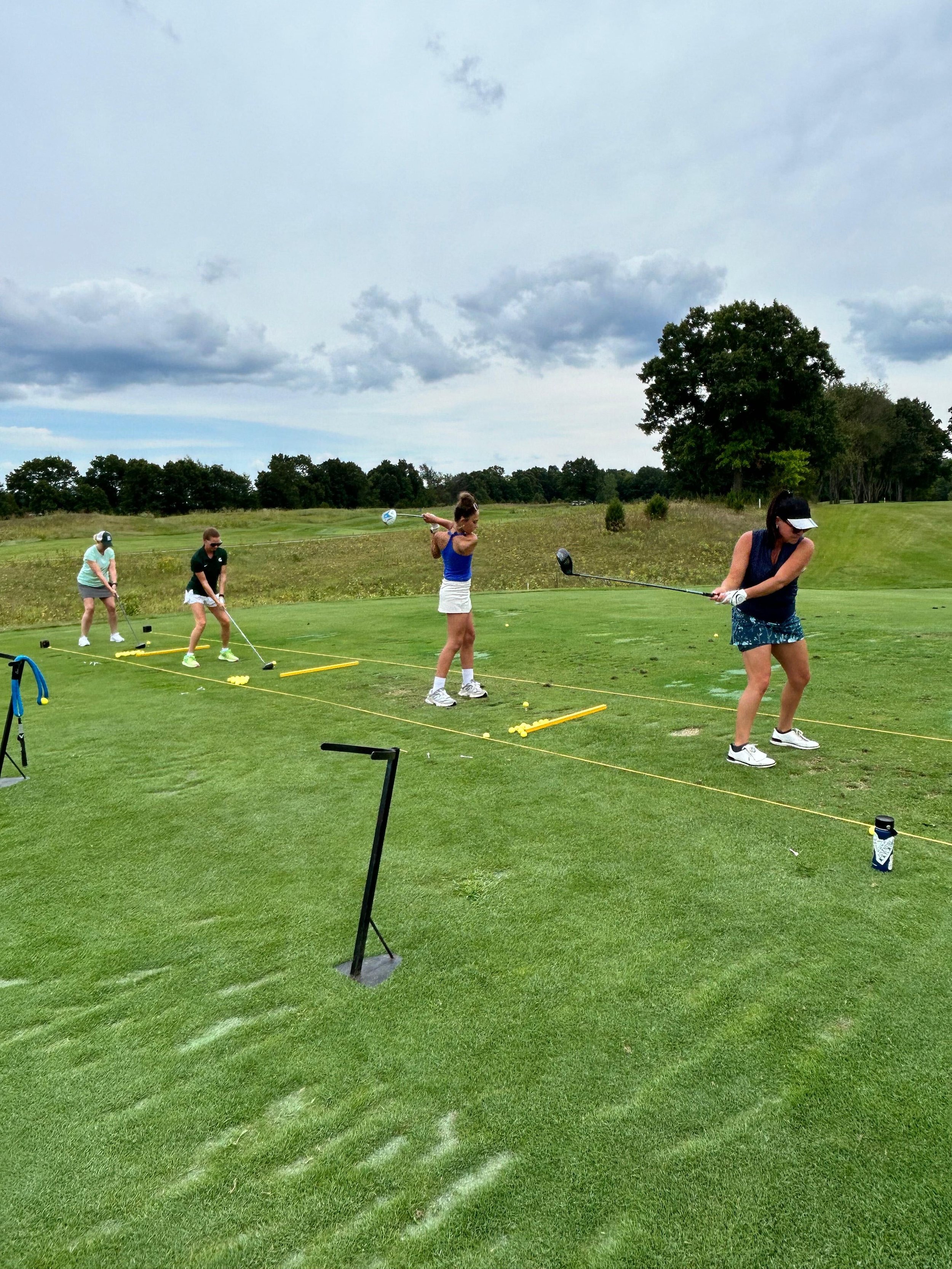
Fall brings a different feel to the golf course. The air gets cooler, the leaves change color, and a familiar hole can play differently than it did during the summer. For beginners, those changes can be confusing. A shot that usually reaches the green might come up short, or a ball that normally rolls down the fairway might stop almost immediately.
That doesn’t mean you’ve lost your progress. Weather and course conditions are part of golf, and learning to adjust is another skill you can develop.
At Golf Like a Girl, we believe understanding the game helps girls and women feel more comfortable playing it. With a few practical adjustments, you can approach fall rounds feeling prepared and ready to enjoy the season.
Give Yourself Time to Get Comfortable
Give yourself some time to relax and practice a few simple motions before your round. Instead of trying to hit your longest drive right away, start with soft swings and work your way up to your typical pace.
Use those first shots to notice how you feel. Can you turn comfortably in your jacket? Are your hands warm enough to hold the club securely? Does your swing feel balanced?
Choose layers that let you move freely, and remove or add one as conditions change. Comfort matters because it allows you to focus on your shot instead of constantly adjusting your clothing.
Let Today’s Shots Guide Your Club Selection
Your usual club distances are helpful starting points, but they aren’t promises. During a fall round, pay attention to where your shots actually finish rather than expecting every club to perform exactly as it did in July.
If several well struck shots finish short, consider a club that normally travels farther. For example, you might choose a 7-iron instead of an 8-iron for a similar distance.
Avoid responding by swinging as hard as possible. A comfortable swing with a different club is often a more manageable choice than forcing extra distance.
Make adjustments based on what you observe that day. There isn’t one automatic club change that works for every golfer or every weather condition.
Expect Less Roll on Soft Fairways
After rain, soft ground can change how far your ball travels once it lands. A drive may stop close to its landing spot instead of bouncing and rolling forward. The USGA notes that wet, soft conditions can reduce driving distance and make clean contact more difficult.
Think about that when choosing your target. If reaching a spot depends on a long roll, consider a closer landing area instead.
Check the ground around your ball before your next shot, too. Find secure footing and take a moment to understand the lie. You don’t need to invent a completely different swing, start by recognizing that the surface has changed.
Keep Wind Adjustments Simple
Wind can make club selection and aiming feel more complicated, especially when you’re still learning your distances. Begin by noticing its general direction, toward you, behind you, or across the hole.
Then choose a generous target. When conditions feel unpredictable, aiming toward the middle of the green gives you more room than trying to reach a flag near the edge.
Resist the urge to make several swing changes at once. Keep your pace comfortable and ask your coach for help learning specific wind shots.
For beginners, making a clear decision and committing to it is a useful place to start.
Learn the Greens Again Each Round
Don’t assume the greens will feel exactly as they did during your last visit. Before heading to the first tee, spend a few minutes on the practice green.
Try several short putts, followed by a few longer ones. Notice how much effort it takes to move the ball different distances. This gives you a starting point for judging pace.
Continue observing during the round. If your first few putts consistently finish short or run past the hole, use that information on the next green.
Treat each putt as feedback rather than proof that you’re doing something wrong. Adjusting to the surface is part of putting.
Have a Plan for Fallen Leaves
Fall scenery is beautiful, but leaves can make tracking a ball more challenging. Watch each shot until it lands, and choose a nearby landmark to help you remember the area.
A particular tree, patch of grass, or bunker edge is more useful than a general thought like “somewhere on the right.”
Ask your playing partners to watch with you, and return the favor. You can also try a ball color that stands out against the ground at your course.
Before playing, ask the golf shop about any local rules or seasonal guidance. Avoid assuming that a ball hidden by leaves automatically qualifies for a free replacement.
Plan Around Shorter Days and Course Conditions
A November round takes a little more planning. Choose a tee time that gives you enough daylight, and consider nine holes when your available window is shorter.
Check with the course before leaving home if frost is possible. Frost delays are common during fall, and waiting for staff to reopen affected areas helps protect the turf.
Follow any instructions about carts, practice areas, or temporary closures. A flexible plan makes changes easier to handle and helps everyone enjoy the course responsibly.
Enjoy Learning a Different Side of Golf
Changing weather gives you opportunities to become a more observant golfer. You begin noticing how the ground affects your shots, how the greens feel, and when a different club might help.
You don’t have to master every adjustment in one round. Choose one or two things to pay attention to, and build from there.
At Golf Like a Girl, we want girls and women to feel welcome throughout the learning process. A fall round is another chance to ask questions, try something new, and enjoy time on the course, even when the game looks a little different than it did in summer.